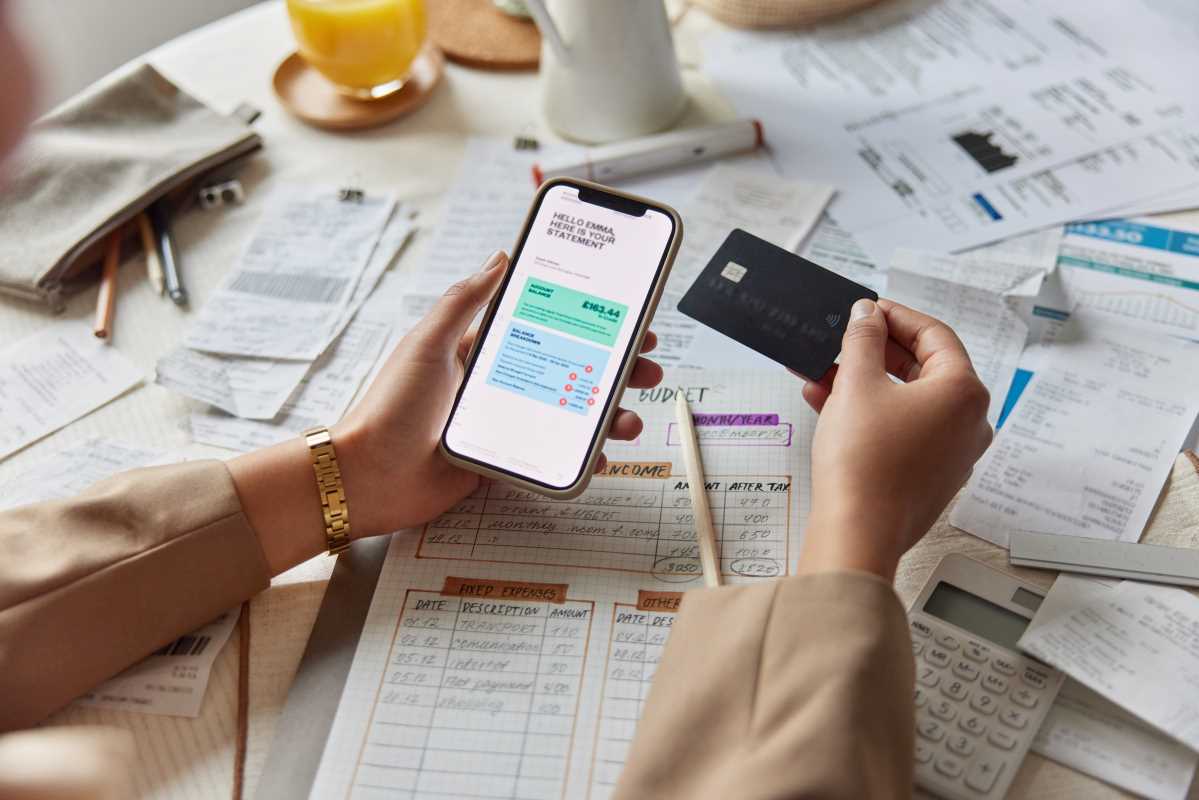
Do you feel a pit in your stomach every time your car makes a weird noise? If so, you're definitely not alone. The stress of living paycheck to paycheck is exhausting, and it's currently the reality for most of us.
Recent data shows that 67% of workers are living paycheck to paycheck.¹ Last year, the share of people living this way out of pure financial necessity jumped to 40%.² To make matters worse, a Bank of America study found that 24% of households spend more than 95% of their income just on basic survival needs like rent, groceries, and utilities.³
When you're operating on such a razor-thin margin, traditional financial advice can feel like a slap in the face. Hearing someone tell you to save six months of expenses when you can barely pay your electric bill is incredibly frustrating.
So what does this actually mean for you? It means we need to change how we define an emergency fund.
Instead of aiming for a massive, unrealistic five-figure sum, your immediate goal is a starter fund of $1,000 (or even $500). That is enough to cover a new tire, a sudden dentist visit, or a minor appliance repair.
As Mark Hamrick, a Senior Economic Analyst at Bankrate, explains, we are a paycheck-to-paycheck nation, and inflation has left fewer Americans with a financial safety net to cover inevitable unexpected expenses.⁴ But you can't afford to wait for things to magically get cheaper. You have to start building a buffer now, even if it's with pocket change.
Audit Your Spending Without the Guilt
Before you can save money, you need to know exactly where your cash is going. Forget about feeling guilty for buying a coffee. Instead, focus on getting a clear, honest picture of your cash flow.
Many of us are actually cash flow negative without even realizing it. Fragmented digital spending through apps like Venmo, Cash App, and automated subscriptions makes it easy for money to slip away unnoticed. Mandy Kelso, the Head of Financial Education at TD Bank, points out that looking closely at all your accounts is the only way to see if you're truly living paycheck to paycheck or if you're in negative cash flow.
To fix this, track every single dollar you spend for 30 days. You can use a simple notebook, a spreadsheet, or an app.
Once you have your data, divide your expenses into two groups
• Needed needs: These are your absolute survival costs, including rent, utilities, basic groceries, and insurance.
• Flexible wants: This includes dining out, streaming services, and impulse shopping.
You're not trying to cut out all joy from your life. You're looking for the hidden leaks. Canceling just one unused $15 monthly subscription and putting that money into savings gives you an extra $180 a year. That's almost a fifth of your starter goal.
The Power of Micro-Savings
Have you ever told yourself that you'll start saving once you get a raise or a big tax refund? It's a common trap, but waiting for a windfall rarely works. The real magic lies in micro-saving, which is the habit of saving tiny amounts of money consistently.
Saving small amounts removes the mental pressure. If you try to save $100 a week, your brain panics because that money is needed elsewhere. But if you save $10, you barely notice it's gone.
The easiest way to do this is by automating the process to remove decision fatigue. You can set up a split direct deposit with your employer to send a tiny portion of your paycheck straight to a separate savings account.
Let's look at the math
• Five dollars a week: This adds up to $260 in a year.
• Ten dollars a week: This gives you $520 by the end of the year.
• Twenty-five dollars a week: This gets you to $1,300 in a year, completely securing your starter emergency fund.
You can also use round-up apps like Chime, Acorns, or MoneyLion. Every time you buy groceries or gas, these apps round up the transaction to the nearest dollar and transfer the spare change to your savings. It's the digital equivalent of throwing your loose coins into a jar, and it builds up surprisingly fast.
Strategic Ways to Boost Your Savings Rate
When you're living on a tight budget, cutting back on groceries only goes so far. Eventually, you run out of things to cut. That's when you need to get strategic about boosting your savings rate.
First, try negotiating your bills. Call your internet, phone, and insurance providers and ask for a better rate. Many companies have retention departments authorized to give you discounts just to keep you as a customer.
Second, use the 50/50 windfall rule. When you get unexpected cash, like a tax refund, a work bonus, or cash-back rewards, split it in half. Put 50% directly into your emergency fund, and use the other 50% to pay down debt or treat yourself.
Finally, consider a temporary side hustle to build your safety net. Many adults use side gigs to make ends meet, and you can do the same with a highly specific goal in mind.
• Pet sitting or dog walking: This is a great option if you love animals and want a low-stress way to earn extra cash.
• Food delivery or rideshare driving: This offers flexible hours that you can fit around your main job.
• Freelance writing or virtual assistance: This allows you to use your professional skills from home on your own schedule.
The key is to treat this extra income as invisible. Every dollar you earn from your side gig should go straight into your emergency fund until you hit your $1,000 goal. Once you reach that milestone, you can scale back your hours and breathe a sigh of relief.
Protecting Your Progress
Once you start building your fund, you need to protect it from your own spending habits. If your savings are sitting in your everyday checking account, you'll eventually spend them.
Keep your emergency fund in a separate High-Yield Savings Account (HYSA) at a completely different bank. HYSAs pay much higher interest rates than traditional brick-and-mortar savings accounts, meaning your money grows faster. Plus, having your savings at a separate bank creates a helpful speed bump, as it takes a day or two to transfer money back to your checking account, which stops impulse spending.
You also need to define what actually counts as an emergency.
• An emergency is: A sudden car repair, an urgent medical bill, or an unexpected job loss.
• An emergency is not: A holiday gift, a weekend trip, or a flash sale on clothes.
If you're unprepared for unexpected costs, you can end up in a difficult situation that impacts your credit and causes undue stress, as Simon Powley from Kitsap Credit Union points out.
Celebrate your milestones along the way. When you hit $100, $500, and finally $1,000, take a moment to appreciate your hard work. You're actively breaking the cycle of financial stress, one small deposit at a time.
To help you get started on your savings journey, here are some of the best tools and resources to help you build your financial buffer.
Sources:
1. 67% of Workers Living Paycheck to Paycheck in 2025
https://www.pennyforward.com/67-living-paycheck-to-paycheck-in-2025/
2. Running on Empty: How Paycheck-to-Paycheck Living Turns Small Shocks Into Big Crises
https://www.pymnts.com/study_posts/running-on-empty-how-paycheck-to-paycheck-living-turns-small-shocks-into-big-crises/
3. Bank of America Institute Paycheck-to-Paycheck Report
https://institute.bankofamerica.com/content/dam/economic-insights/paycheck-to-paycheck.pdf
4. Bankrate's Annual Emergency Savings Report
https://www.bankrate.com/banking/savings/emergency-savings-report/
5. Federal Reserve Report on the Economic Well-Being of U.S. Households
https://www.federalreserve.gov/publications/2025-economic-well-being-of-us-households-in-2024-savings-and-investments.htm
*This article on FinanceGuidance is for informational and educational purposes only. Readers are encouraged to consult qualified professionals and verify details with official sources before making decisions. This content does not constitute professional advice.*